
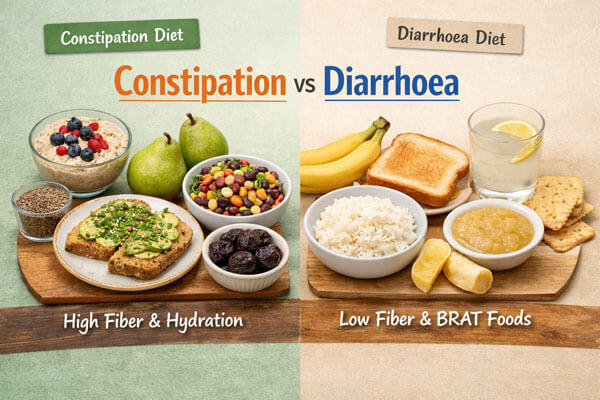
Constipation vs diarrhoea really are two opposite gut problems – and they need opposite food strategies.
If you use a “constipation diet plan” when you actually have diarrhoea (or the other way round), you can accidentally make things worse instead of better.
In this guide, we’ll keep things very practical:
- One simple food plan for constipation – to soften and move stools
- One simple food plan for diarrhoea – to calm and firm stools
We’ll also look at soluble vs insoluble fibre, hydration, electrolytes, the BRAT diet, and when you should stop self-managing and call a doctor.
I’ll keep the language simple, but the logic will stay science-based and safety-first.
1. Introduction
In modern life, it’s very common to swing between:
- Days of constipation – hard, dry, painful stools, bloating, “nothing is moving”.
- Sudden diarrhoea – loose or watery stools, rushing to the toilet, fear of eating.
Desk jobs, stress, processed food, low fibre, too much sugar, antibiotics, travel, infections, IBS, and even anxiety – all of these can affect your gut.
The problem?
People search “constipation vs diarrhoea” and get generic lists of foods, but not a clear, side-by-side plan:
- What exact foods soften stool?
- What exact foods firm stool?
- What should I drink?
- Can I use the BRAT diet?
- How long is it safe to self-manage before seeing a doctor?
This article is designed to be a clear, printable guide for adults, students, busy professionals, parents, travellers – and a handy explainer that health coaches and clinicians can share with patients.
2. Quick Snapshot: Key Facts & Takeaways
If you just need the highlights, start here:
- Constipation and diarrhoea need opposite diets.
- Constipation: more fluid, more fibre (especially insoluble + some soluble), more movement, less ultra-processed food.
- Diarrhoea: more fluids + electrolytes, gentle low-fibre foods, then slowly reintroduce fibre.
- Soluble vs insoluble fibre:
- Soluble fibre (oats, bananas, psyllium, chia) forms a gel — it can soften hard stools and thicken watery stools.
- Insoluble fibre (wheat bran, vegetable skins, whole grains) helps push stools along and is usually good for constipation, but can worsen diarrhoea if used too early.
- Hydration strategy is different:
- Constipation: steady water intake across the day plus some warm fluids.
- Diarrhoea: oral rehydration solutions, broths, coconut water – not just plain water.
- BRAT diet (Banana, Rice, Applesauce, Toast) can help short-term during acute diarrhoea, but it’s not nutritionally complete and should not be used for many days.
- Common mistake #1: Eating lots of raw salads, nuts, and bran when you have active diarrhoea – this often worsens symptoms.
- Common mistake #2: Restricting fibre for a long time after diarrhoea or infection – this can weaken your gut microbiome and lead to chronic constipation or IBS-like symptoms.
- You must see a doctor if you have:
- Blood in stool
- Persistent constipation or diarrhoea for more than 2–3 weeks
- Unintentional weight loss, fever, night sweats, or severe abdominal pain.
- This guide is for short-term support and long-term balance, not for ignoring serious warning signs.
3. How This Fits into Modern Lifestyle & Future Health
Our modern lifestyle is almost designed to upset the gut:
- Long sitting hours → sluggish bowel movement
- Ultra-processed foods → low fibre, high sugar, unhealthy fats
- Irregular meals → confused digestion
- High stress → changes gut motility (can cause either constipation or diarrhoea)
- Frequent painkillers, antibiotics, and acid-reducing drugs → gut microbiome disturbance
- Poor sleep → hormonal changes affecting digestion and appetite
Long-term, ignoring constipation and diarrhoea can contribute to:
- Haemorrhoids and anal fissures (from chronic straining)
- Diverticular disease (small pouches in the colon wall)
- Nutrient deficiencies and dehydration (from persistent diarrhoea)
- Worsening of IBS, anxiety and mood issues (via the gut–brain axis)
- Reduced quality of life – always planning your day around the toilet
A balanced constipation diet plan or diarrhoea diet plan isn’t just about “today’s bathroom trip”.
It’s also about protecting your gut, metabolism, brain, and immune health in the long run.
4. Science Background (Explained Simply)
Let’s break down what’s actually happening in the gut.
4.1 How a normal stool is formed
- Food is chewed and mixed with saliva.
- In the small intestine, most nutrients are absorbed.
- In the large intestine (colon), bacteria ferment fibre and water is absorbed.
- This forms a soft, smooth, sausage-like stool that is easy to pass.
4.2 What is constipation?
Constipation usually means:
- Fewer than 3 bowel movements per week, and/or
- Hard, dry, lumpy stools
- Straining, feeling of incomplete emptying
Why it happens (simplified):
- Too little fibre → not enough “bulk” to stimulate movement
- Too little water → colon pulls extra water out, making stool dry
- Not moving enough → slow bowel motility
- Ignoring the urge to go → stool sits longer, dries out more
- Some medications (iron, some antidepressants, opioids), hormonal changes, or medical conditions can also slow the gut.
4.3 What is diarrhoea?
Diarrhoea usually means:
- Loose, watery stools
- More frequent than usual (often 3+ times/day)
- May be urgent and accompanied by cramps
Why it happens:
- Infections (viral, bacterial, parasitic)
- Food poisoning
- Certain medications (antibiotics, metformin, magnesium-containing antacids)
- Food intolerances (lactose, fructose, FODMAPs)
- IBS, IBD, celiac disease, hyperthyroidism, and other conditions
In diarrhoea:
- The gut moves too fast; water is not absorbed properly.
- The gut lining may be inflamed, so high-fibre or high-fat foods can irritate it more.
4.4 Soluble fibre vs insoluble fibre
- Soluble fibre dissolves in water to form a gel (oats, barley, psyllium, apple, banana, carrot, sweet potato, chia seeds):
- Helps soften hard stools in constipation.
- Helps absorb excess water and thicken stool in mild diarrhoea.
- Insoluble fibre does not dissolve (wheat bran, whole wheat, brown rice, vegetable skins, nuts, seeds):
- Increases stool bulk and speeds up transit, useful for constipation.
- Can worsen active diarrhoea by stimulating the gut too much.
4.5 Hydration & electrolytes
- In constipation: hydration keeps the stool soft and easier to pass.
- In diarrhoea: you lose water + electrolytes (sodium, potassium), so you need more than just plain water – think ORS, broths, salted soups, coconut water.
5. Core Principles & Framework
We’ll work with two clear frameworks – one for constipation, one for diarrhoea.
5.1 For Constipation: Core Principles
- Hydrate all day, not just at once
Aim for regular sips of water, herbal teas, and some warm liquids. - Increase fibre slowly (especially insoluble fibre)
- Focus on whole grains, vegetables, fruits, and legumes.
- Increase gradually over 5–7 days to avoid gas and bloating.
- Include some soluble fibre “gel” foods
Oats, chia, flax, psyllium, apple, pear, banana (ripe), sweet potato. - Add healthy fats
Olive oil, nuts, seeds, avocado can lubricate the gut slightly and support hormone health. - Move your body daily
Even a 20–30 minute walk can improve bowel motility. - Create a toilet routine
Try sitting on the toilet after breakfast daily; don’t rush. A small footstool can help. - Limit constipating habits
Very low-calorie diets, excessive cheese, large amounts of refined white flour, heavy fried foods, and constant “on-the-go” eating.
5.2 For Diarrhoea: Core Principles
- Prevent dehydration first
- Use oral rehydration solution (ORS), clear broths, coconut water, and water.
- Small frequent sips are better than large gulps.
- Choose gentle, low-fibre, low-fat foods initially
Think BRAT-style: banana, white rice, toast, applesauce, boiled potatoes, plain crackers, yoghurt (if tolerated). - Use soluble fibre strategically
- Ripe banana, oats, apple/pear without skin, psyllium (if advised by a professional).
- These can help bulk up loose stool.
- Avoid gut irritants
- Alcohol, caffeine, spicy foods, deep-fried food, very sugary drinks, big high-fibre salads, raw vegetables, large legumes servings.
- Rebuild the microbiome gradually
Once stools start to firm up, reintroduce regular fibre and fermented foods (yoghurt with live cultures, kefir, small amounts of pickle, fermented veggies). - Watch portion size
Small, frequent meals are easier on an irritated gut than large heavy meals.
6. Step-by-Step Practical Guidance
Let’s convert the principles into real-world actions.
6.1 What to Eat for Constipation
a) Eat more of:
- High-fibre fruits
- Apples, pears (with skin), berries, prunes, figs, kiwi, oranges
- High-fibre vegetables
- Carrots, beetroot, pumpkin, beans, peas, okra, spinach, other leafy greens
- Whole grains
- Oats, whole wheat roti/bread, brown rice, quinoa, barley, millets
- Legumes & pulses (if tolerated)
- Lentils, chickpeas, kidney beans, black beans (start with small portions)
- Healthy fats
- Nuts, seeds (flax, chia, pumpkin), olive oil, avocado
b) Hydration for constipation
- 6–8 glasses of fluids per day (adjust for climate/body size), including:
- Water
- Warm water with lemon
- Herbal teas (peppermint, chamomile, ginger)
- Light soups
Avoid relying only on cold sugary drinks; they don’t help the bowels in a good way.
c) What to limit or avoid (during constipation)
- Very low-fibre diets (mostly white flour, meat, cheese, sweets)
- Heavy fried fast food
- Large quantities of cheese and processed meats
- Excessive caffeine (coffee/energy drinks) which can dehydrate some people
d) Meal structure for constipation
- Breakfast:
- Oats porridge with fruit + nuts or
- Whole grain toast with peanut butter + fruit
- Lunch:
- Plate with ½ vegetables, ¼ whole grains, ¼ protein (beans, lentils, tofu, fish, lean meat)
- Dinner:
- Lighter but still with vegetables and whole grain or starchy veg
- Snacks:
- Fruit, nuts, seeds, yoghurt with fruit, vegetable sticks with hummus
6.2 What to Eat for Diarrhoea
(This is for short-term symptom management. Persistent or severe diarrhoea needs medical attention.)
a) Fluids & electrolytes
- Oral rehydration solution (ORS) – ideal if stools are very watery.
- Clear soups/broths – vegetable or chicken broth.
- Coconut water – natural electrolytes (not in huge excess).
- Water – frequent small sips.
Avoid:
- Sugary soft drinks
- Excess fruit juice
- Alcohol
- Very strong coffee
b) Foods that help firm up stool
- BRAT-style basics (for 24–48 hours only):
- Banana (ripe)
- White rice/plain khichdi
- Applesauce (or stewed apple without peel)
- Toast (white or light bread)
- Other gentle options:
- Boiled or mashed potatoes (not fried)
- Plain crackers or plain biscuits
- Plain yoghurt/curd with live cultures (if you tolerate dairy)
- Plain oatmeal made with water
- Soft, well-cooked carrots or pumpkin
c) Foods to avoid during active diarrhoea
- Raw salads & raw vegetables
- Beans, lentils, chickpeas, large amounts of nuts & seeds
- Very spicy foods
- Deep-fried foods
- Large amounts of insoluble fibre (bran, whole wheat in large servings)
- High-fat meals (creamy curries, heavy gravies)
- Sugar-free gums/candies with sorbitol or xylitol (these can cause diarrhoea)
d) Meal structure for diarrhoea
- Small, frequent meals rather than 2–3 big meals.
- Combine:
- A gentle carb (rice, toast, potato, oatmeal)
- A binding food (banana, applesauce)
- Some protein when tolerated (boiled egg, yoghurt, soft paneer, tofu, a little plain fish/chicken)
After 24–48 hours, if stools are improving, slowly reintroduce:
- Soft, cooked vegetables
- Normal grains (e.g., chapati, brown rice in small amounts)
- Normal protein portions
7. Special Populations & Edge Cases
7.1 Children & teens
- Kids dehydrate faster than adults with diarrhoea; ORS is crucial.
- Never give strong laxatives to children without medical advice.
- Persistent constipation in children may signal withholding behaviour, low fibre, or rarer medical issues – needs paediatric guidance.
7.2 Pregnant or breastfeeding women
- Constipation is common due to hormones and iron supplements.
- Focus on fibre, fluids, movement, but avoid high-dose herbs, detox teas, or strong laxatives unless your obstetrician approves.
- Diarrhoea in pregnancy with fever, pain or blood in stool needs urgent medical review to protect both mother and baby.
7.3 Older adults
- Often drink less water and may be on constipating medications (e.g., opioids, some heart drugs).
- Risk of dehydration is higher during diarrhoea.
- Sudden change in bowel habits in older age warrants a doctor’s check (screening for polyps, cancer, etc.).
7.4 People with chronic illnesses
- Diabetes: diarrhoea can seriously disturb blood sugars; ORS and food choices should be planned carefully.
- Kidney disease: fluid and electrolyte intake must be guided by a nephrologist/dietitian.
- IBD (Crohn’s, ulcerative colitis): diet for flares vs remission must be individualised; do not follow generic internet plans only.
- Celiac disease: diarrhoea can signal gluten exposure; strict gluten-free diet is non-negotiable.
In all these situations, this article is only a starting framework – not your final plan.
8. Common Mistakes, Myths & Red Flags
8.1 Myths & mistakes around constipation
- “I’ll just do a juice cleanse.”
Extreme juice fasts can reduce fibre intake and slow your gut, sometimes making constipation worse long-term. - “I need laxatives every day.”
Frequent use of stimulant laxatives without supervision can lead to dependency and may mask underlying problems. - “If I don’t eat, my constipation will clear.”
Very low food intake often reduces stool bulk and slows motility even more. - “All fibre is the same.”
Soluble and insoluble fibre behave differently. Some people with IBS need careful, personalised fibre strategies.
8.2 Myths & mistakes around diarrhoea
- “I should stop eating completely.”
Short-term poor appetite is normal, but prolonged fasting during diarrhoea can cause weakness and delay healing. Gentle foods usually help. - “BRAT diet forever.”
BRAT is only for short-term acute diarrhoea. It’s not nutritionally complete – you must go back to a balanced diet when symptoms improve. - “Diarrhoea always needs antibiotics.”
Many cases are viral or functional (IBS-related) and don’t benefit from antibiotics. Overuse can worsen gut microbiome health. - “Spicy food caused this, that’s all.”
Sometimes true, but chronic diarrhoea could signal infection, IBD, celiac disease, thyroid issues, or even cancer. Don’t self-diagnose for months.
8.3 Red flags in information
Be cautious if someone:
- Promises to “cure constipation in 24 hours” or “stop diarrhoea instantly” with a single magic supplement.
- Asks you to completely eliminate major food groups without medical reason (“never eat carbs again”, “never eat fruit again”).
- Encourages using very high doses of herbal laxatives or detox teas daily.
9. Safety, Contraindications & When to See a Doctor/Dietitian
9.1 Who should consult a professional before changing diet?
- People with:
- Diabetes
- Heart disease
- Kidney or liver disease
- Inflammatory bowel disease (IBD)
- Celiac disease
- History of eating disorders
- Pregnant or breastfeeding women
- Anyone on multiple medications that affect fluids or blood pressure
9.2 Warning symptoms: get urgent medical help if you have:
- Blood in stool (red or black, tar-like)
- High fever and chills with diarrhoea
- Severe abdominal pain or rigid abdomen
- Sudden unintentional weight loss
- Vomiting that prevents you from keeping fluids down
- Diarrhoea lasting more than 48 hours with signs of dehydration:
- Very dark urine or not passing urine
- Dizziness, fainting, confusion
- Rapid heartbeat
- Constipation with:
- Complete inability to pass gas or stool
- Severe worsening pain
- Persistent vomiting
Diet changes are helpful, but they should never delay necessary medical care.
10. Sample Day / Sample Plan
You can use these as templates, then adapt to your culture, ingredients, and preferences.
10.1 Sample Constipation Diet Plan (1-Day)
Goal: Increase fibre and fluid gently, support regular bowel movement.
| Time | Meal | Example |
|---|---|---|
| On waking | Hydration | 1 glass warm water; optional: squeeze of lemon |
| Breakfast | High-fibre start | Oats porridge cooked in water or milk, topped with 1 small sliced apple (with skin) + 1 tbsp mixed nuts and seeds |
| Mid-morning | Snack | 1 orange or 2 kiwis + water or herbal tea |
| Lunch | Balanced plate | ½ plate mixed vegetables (e.g., spinach, carrot, beans), ¼ plate brown rice or whole grain roti, ¼ plate lentils/chickpeas or lean protein; 1 small bowl curd/yoghurt if tolerated |
| Mid-afternoon | Snack | Handful of nuts + 1 fruit (pear or guava with skin, if tolerated) |
| Evening | Gentle movement | 20–30 min brisk walking; sip water before and after |
| Dinner | Lighter, still fibrous | Vegetable soup (lots of vegetables, beans or lentils) + small whole grain bread or roti with a drizzle of olive oil |
| Before bed | Optional | Warm herbal tea; avoid heavy snacks late night |
Tip: If recommended by your doctor, 1–2 teaspoons of psyllium husk in water or curd/yoghurt in the evening can help some people – but always start low and increase gradually, with plenty of water.
10.2 Sample Diarrhoea Diet Plan (1-Day – Acute Phase)
Goal: Prevent dehydration, calm the gut, gently firm stool. Suitable for short-term use.
| Time | Meal | Example |
|---|---|---|
| On waking | Rehydration | ½–1 glass ORS sipped slowly |
| Breakfast | Gentle carbs | 1 small bowl plain oatmeal cooked in water + ½ ripe banana mashed in; herbal tea |
| Mid-morning | Fluids | Coconut water or ORS sips + 1–2 plain crackers if hungry |
| Lunch | BRAT-style | 1 small serving plain white rice or soft khichdi + boiled potato (no skin, lightly salted) + a few spoonfuls of plain curd/yoghurt |
| Mid-afternoon | Snack & fluids | Stewed apple (no peel) or applesauce + sips of ORS/water |
| Evening | Light | 1–2 slices toasted white/light bread with a thin spread (e.g., a little ghee/unsalted butter) if tolerated; clear soup |
| Before bed | Fluids | Water or herbal tea; avoid heavy or fatty foods late night |
When stools start to firm up (usually after 24–48 hours):
- Add soft cooked vegetables (carrot, pumpkin, bottle gourd, etc.)
- Transition from white rice to regular grains (chapati, brown rice)
- Slowly increase fibre back to normal levels to support long-term gut health
11. FAQs Based on Real Search Intent
Q1. How do I know if I have constipation vs diarrhoea?
- Constipation: fewer than 3 bowel movements per week, hard or lumpy stool, straining, feeling blocked or not fully empty.
- Diarrhoea: loose or watery stool, increased frequency, urgency, sometimes cramps.
If your pattern is unclear, or you have alternating constipation and diarrhoea, it can be IBS or another condition – best to speak with a doctor.
Q2. Can I have both constipation and diarrhoea in IBS?
Yes. Some people with IBS have IBS-C (constipation-dominant), some IBS-D (diarrhoea-dominant), and some IBS-M (mixed) where they alternate. You’ll likely need a personalised plan for different phases, not just one fixed diet.
Q3. Is the BRAT diet still recommended for diarrhoea?
BRAT (Banana, Rice, Applesauce, Toast) can help short-term during acute diarrhoea because it’s gentle and binding.
However:
- It is not nutritionally complete – low in protein, fat, and many vitamins.
- Use it for 24–48 hours only, then transition to a more varied, balanced diet with protein, vegetables, and healthy fats as symptoms improve.
Q4. How fast will I see results from a constipation diet plan?
Some people notice softer stools in 1–3 days after improving hydration and fibre, especially if they also move more and respect natural toilet urges.
For chronic constipation, it may take several weeks of consistent habits, and sometimes you still need medical assessment to rule out underlying causes.
Q5. Are probiotics useful for constipation or diarrhoea?
- For mild diarrhoea (especially after antibiotics), some probiotic strains can help stool recovery.
- For constipation, certain probiotics might help stool frequency and consistency in some people.
But effects vary by strain and person. Probiotics are not magic; they work best alongside a fibre-rich, balanced diet. Always talk to your doctor if you have immune issues, are very unwell, or are on complex medications.
Q6. Can coffee help with constipation?
Coffee can stimulate bowel movement in some people, but:
- Overuse may lead to dependence on coffee to pass stool.
- It can worsen anxiety, reflux, or IBS in others.
- Large amounts may contribute to dehydration.
If you use coffee for constipation, keep it to moderate amounts and focus more on fibre and hydration as long-term strategies.
Q7. What about intermittent fasting – good or bad for constipation?
Intermittent fasting can work for some people, but:
- Long fasting windows with very low total food and fibre intake may worsen constipation.
- If your eating window is short, it’s vital to pack in adequate fluids, vegetables, fruits, and whole grains – not just one heavy low-fibre meal.
If you notice constipation after starting fasting, review your total fibre intake, hydration, and movement.
Q8. Which is better for diarrhoea – rice or bread?
Both plain white rice and white toast are usually well tolerated. Rice is often easier to digest for many people globally and can be combined with boiled potatoes or yoghurt for more variety. Choose what feels better in your own body.
Q9. Do I need to completely avoid dairy with diarrhoea?
Not always. Some people become temporarily lactose intolerant during or after an infection.
Options:
- Try curd/yoghurt with live cultures or lactose-free milk first.
- If symptoms worsen after dairy, limit it for a short period and reintroduce slowly as you recover.
Q10. Can I lose weight just by fixing constipation or diarrhoea?
You may notice a small change on the scale as stool and water balance normalises, but real, sustainable weight loss still depends on overall diet quality, calorie balance, movement, sleep, and stress management.
The primary goal of these plans is gut comfort and health, not rapid weight loss.
12. Summary & Action Steps
Constipation vs diarrhoea are opposite problems, and they really do need opposite food plans:
- For constipation:
- More fibre (especially insoluble, plus some soluble)
- Steady hydration
- Regular movement
- Routine bathroom habits
- Limited ultra-processed, low-fibre foods
- For diarrhoea:
- Hydration and electrolytes first
- Short-term gentle foods (BRAT-style)
- Strategic soluble fibre to bulk stool
- Avoid irritants and heavy, high-fibre foods during the acute phase
- Gradual return to a balanced, fibre-rich, gut-friendly diet
6 Simple Next Steps You Can Start Today
- Identify your current issue clearly – constipation, diarrhoea, or mixed.
- Adjust your meals accordingly using the relevant sample plan as a starting point.
- Carry a water bottle and schedule 6–8 fluid breaks across the day.
- Add one fibre-rich food at breakfast and lunch if constipated (fruit/veg/whole grain).
- Stock your kitchen with “gentle gut” foods (rice, banana, applesauce, ORS, oats, yoghurt) for emergency diarrhoea days.
- Book a medical appointment if symptoms are severe, long-lasting, or accompanied by red-flag signs.
Balanced gut care isn’t about perfection. It’s about choosing the right tools for the right problem, listening to your body, and knowing when to ask for help.
13. Brief Note for Health Professionals
You can use this article as a patient handout or counselling aid by:
- Highlighting the comparison between constipation vs diarrhoea plans.
- Marking or circling food items that fit your patient’s culture, budget, and medical conditions.
- Using the sample day plans as a base, then personalising them (e.g., lower glycaemic options for diabetes, renal-friendly choices for CKD).
Encourage patients to track symptoms and stool form (e.g., Bristol Stool Chart) while implementing these dietary patterns.
Disclaimer
This article is for educational purposes only and is not a substitute for professional medical advice, diagnosis, or treatment.
Always consult your doctor or a registered dietitian before making significant changes to your diet, especially if you have existing health conditions, are on medication, are pregnant, or are breastfeeding.
Seek urgent medical care if you experience any severe or warning symptoms such as blood in stool, high fever, severe pain, signs of dehydration, or rapid weight loss.
