
1. Introduction
If you’re pregnant, plant-based, and staring at your plate wondering, “Am I getting enough protein, iron and B12 for my baby?”—you’re not alone.
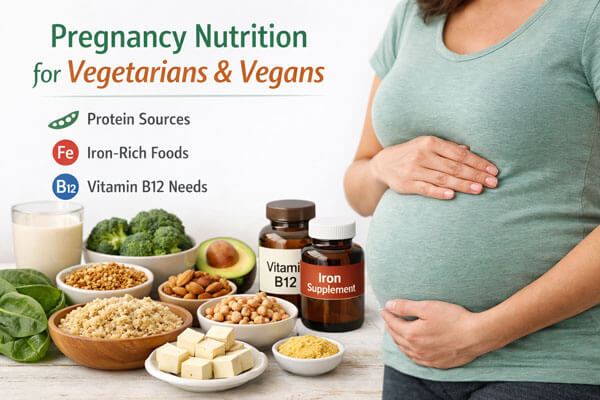
Pregnancy nutrition for vegetarians and vegans can absolutely be safe and healthy, but it does need more planning, especially for three nutrients:
- Protein – for your baby’s growth and your expanding blood volume
- Iron – to prevent anaemia and support oxygen delivery
- Vitamin B12 – for your baby’s brain and nervous system
Guidelines suggest that in the 2nd and 3rd trimester, protein needs rise to about 1.1 g per kg of body weight per day (around 71 g/day for many people). Iron needs increase to 27 mg/day, and B12 needs to about 2.6 micrograms/day in pregnancy.
On a vegetarian or vegan pregnancy diet, it is possible to meet these needs—especially with:
- A solid plant-based pregnancy framework
- Smart use of fortified foods and supplements where needed
- Regular check-ins with your doctor or dietitian
This guide will walk you through exactly how to build a safe, realistic plant-based pregnancy diet that protects both you and your baby—without perfectionism or food fear.
2. Quick Snapshot: Key Facts & Takeaways
If you only have 2 minutes, start here.
- Yes, vegetarian and vegan pregnancy can be safe when carefully planned and monitored; major guidelines agree it can be nutritionally adequate, but there is a higher risk of certain deficiencies (iron, B12, iodine, omega-3, zinc).
- Protein needs go up in pregnancy: roughly 71 g/day in the 2nd and 3rd trimesters for many people. You can reach this with combinations of lentils, beans, soy, dairy/eggs (for vegetarians), nuts, seeds and whole grains.
- Iron needs rise to ~27 mg/day. Most pregnant people are advised to take an iron-containing prenatal plus iron-rich foods (lentils, beans, soy, leafy greens, fortified cereals, jaggery, pumpkin seeds).
- Vitamin B12 is non-negotiable, especially for vegans. RDA in pregnancy is 2.6 mcg/day and is usually met with supplements and/or B12-fortified foods.
- Vegan pregnancies without B12 and iron planning are linked with higher risk of low birth weight and small-for-gestational-age babies.
- Pair iron-rich plant foods with vitamin C (lemon, amla, citrus, guava, capsicum) and avoid taking iron with tea, coffee or calcium to improve absorption.
- A good prenatal vitamin is your baseline, not your entire plan. Food still matters.
- Regular blood tests (haemoglobin, ferritin, B12, sometimes vitamin D, iodine, folate) are essential to catch deficiencies early.
- If you are strictly vegan, have a history of anaemia or B12 deficiency, or are carrying twins, you must work with a doctor/dietitian.
3. How This Fits into Modern Lifestyle & Future Health
Today’s reality:
- More people are choosing vegetarian and vegan diets for ethical, environmental or health reasons.
- At the same time, ultra-processed plant foods (fake meats, sugary vegan snacks, instant noodles) are everywhere.
- Many pregnant women work long hours, sit a lot, sleep irregularly, and snack on convenience foods.
If pregnancy nutrition for vegetarians and vegans is not handled properly, you may face:
- Persistent fatigue, breathlessness, low mood → often iron or B12 related
- Increased risk of anaemia, which can affect labour, recovery and your baby’s growth
- Low birth weight or small-for-gestational-age babies with poorly planned strict vegetarian/vegan diets
- Longer-term issues: poor maternal nutrient stores can affect future pregnancies, your heart and brain health, and your child’s development and metabolism.
On the positive side, a well-planned plant-based pregnancy diet can:
- Naturally include more fibre, antioxidants and healthy fats
- Help reduce excessive gestational weight gain and improve long-term metabolic health
- Model healthy, sustainable eating habits for your child’s future
So this isn’t just about surviving 9 months. It’s about building a nutritional foundation for your and your baby’s future health.
4. Science Background (Explained Simply)
Let’s keep this non-textbook and practical.
Protein: Building Blocks for Two Bodies
- Protein is made of amino acids, the building blocks for your baby’s organs, muscles, hormones and immune system.
- During pregnancy, your body needs more protein for:
- Your baby’s growth
- Your expanding blood volume
- Growth of the uterus, placenta and breast tissue
Research-based recommendations:
- RDA for protein in pregnancy ≈ 1.1 g/kg/day in 2nd & 3rd trimester (around 71 g/day for many women).
- Some newer analyses suggest needs may be slightly higher in late pregnancy for some women, especially if active or under-nourished—but this must be individualized.
Plant proteins (lentils, beans, soy, nuts, seeds, whole grains) can meet these needs when you eat enough calories and variety.
Iron: Oxygen Delivery & Energy
- Iron is essential to make haemoglobin, the protein in red blood cells that carries oxygen.
- During pregnancy your blood volume expands, and your baby and placenta also need iron.
- Total iron cost of a pregnancy is around 1,000 mg.
Guidelines:
- RDA: 27 mg/day of iron in pregnancy.
- WHO and other bodies recommend daily iron + folic acid supplements (e.g., 30–60 mg elemental iron) to reduce anaemia, low birth weight and preterm birth.
Plant-based diets can be lower in iron and the iron is non-heme (less easily absorbed). That’s why fortified foods and supplements are usually needed.
Vitamin B12: Nerves, Brain & Red Blood Cells
- B12 is essential for nerve function, red blood cell production and DNA synthesis.
- B12 deficiency in pregnancy is linked with neural tube defects, developmental delays and anaemia in mother and baby.
- B12 is found almost exclusively in animal foods (meat, eggs, dairy, fish).
Guidelines:
- RDA in pregnancy: 2.6 mcg/day.
- Vegans cannot meet this reliably from food alone and must use B12-fortified foods and/or supplements.
What Studies Say About Vegetarian & Vegan Pregnancy
- Well-planned vegetarian and vegan diets can meet pregnancy requirements, but they require strong awareness and often supplementation.
- Poorly planned strict vegetarian or vegan diets in pregnancy have been associated with higher risk of low birth weight and small-for-gestational-age babies.
In short: plant-based pregnancy is possible but not “automatic health.” You need a plan.
5. Core Principles & Framework
Think of your vegetarian or vegan pregnancy diet as a framework of 7 principles:
1. Prioritise Protein at Every Meal
- Aim for 15–25 g protein per main meal and 5–10 g per snack.
- Use double-up strategies: dal + roti + curd (for vegetarians) or tofu + quinoa + chickpeas (for vegans).
2. Treat Iron as a Daily Non-Negotiable
- Combine iron-rich plant foods + vitamin C boosters.
- Take your prenatal iron exactly as your doctor advises (often away from tea/coffee and calcium).
3. Make Vitamin B12 Supplementation Routine (Especially for Vegans)
- If you’re vegan, assume you need B12 supplements unless your doctor explicitly says otherwise.
- Even many vegetarians benefit from a B12-containing prenatal or extra B12.
4. Eat Enough Calories from Mostly Whole Foods
- Undereating plus low protein/iron is a fast track to exhaustion and deficiencies.
- Focus on: whole grains, legumes, soy, nuts, seeds, fruits, vegetables, dairy/eggs (if vegetarian).
5. Limit “Junk Vegan/Vegetarian” Foods
- Fake meats, deep-fried snacks, sugary drinks, instant noodles, white bread and sweets can crowd out your nutrient-dense foods.
- They’re fine occasionally, but not as the base of your diet.
6. Use Blood Tests as Your GPS
- Ask your doctor about checking: haemoglobin, ferritin, B12, folate, vitamin D, thyroid, sometimes iodine at baseline and during pregnancy.
- Don’t self-diagnose anaemia or B12 deficiency from symptoms alone.
7. Work with Professionals if You’re Higher-Risk
- Strict vegan, history of eating disorders, bariatric surgery, severe vomiting (hyperemesis), multiple pregnancy, pre-existing medical conditions → work closely with a dietitian and obstetrician.
6. Step-by-Step Practical Guidance
Step 1: Understand Your Trimester-Wise Needs
First trimester (0–13 weeks)
- Energy needs: only slightly higher than pre-pregnancy.
- Focus: managing nausea, getting into the habit of daily prenatal + B12 and beginning iron-rich patterns.
- Protein: around 46–60 g/day depending on body size and guidance.
Second trimester (14–27 weeks)
- Baby growth accelerates; blood volume increases.
- Protein: about 71 g/day for many women.
- Iron needs ramp up; your doctor may adjust supplements.
Third trimester (28–40 weeks)
- Highest demands for protein and iron.
- Continue robust protein at every meal, iron supplement adherence, and B12 support.
Step 2: Build Your Protein Toolbox
Vegetarian Protein Sources (include dairy/eggs)
Aim to mix and match through the day:
- Dairy:
- Milk or fortified plant milks (for ovo-vegetarians who avoid dairy, rely on soy milk)
- Curd/yoghurt, paneer, Greek yogurt
- Eggs:
- 1 large egg ≈ 6–7 g protein
- Legumes & Pulses:
- Lentils, chickpeas, rajma, chole, black-eyed peas
- Soy Foods:
- Tofu, tempeh, soya chunks, soy milk
- Nuts & Seeds:
- Almonds, peanuts, walnuts, chia, hemp, pumpkin, sesame
- Whole Grains:
- Oats, quinoa, brown rice, millets, whole wheat
Example daily protein pattern (vegetarian):
- Breakfast: Oats cooked with milk + chia + nuts (15–18 g)
- Mid-morning: 1 cup curd + fruit (7–8 g)
- Lunch: 1 cup dal + 2 phulkas + vegetable sabzi + small bowl curd (20–25 g)
- Snack: Roasted chana + handful peanuts (10–12 g)
- Dinner: Palak paneer + 2 chapatis + salad (20–25 g)
Total easily reaches 70–80 g protein.
Vegan Protein Sources
- Soy: tofu, tempeh, soy milk, soy yoghurt
- Legumes: lentils, chickpeas, kidney beans, black beans, mung dal
- Whole Grains: quinoa, amaranth, oats, brown rice, whole wheat, millets
- Nuts & Seeds: almonds, walnuts, pistachios, peanuts, pumpkin seeds, chia, hemp
- High-protein plant yoghurts and fortified milks
Example daily protein pattern (vegan):
- Breakfast: Besan chilla with veggies + peanut chutney (15–18 g)
- Mid-morning: Smoothie with soy milk + oats + peanut butter + banana (15–20 g)
- Lunch: 1 cup chana masala + 1 cup brown rice + salad (20–22 g)
- Snack: Hummus with carrot/cucumber sticks + roasted seeds (8–10 g)
- Dinner: Tofu stir-fry with vegetables + quinoa (18–22 g)
Again, 70+ g is very realistic.
Step 3: Make Iron Work for You (Not Against You)
Plant Iron-Rich Foods
- Legumes: lentils, chickpeas, kidney beans, black-eyed peas
- Soy: tofu, tempeh, soybeans
- Whole Grains: quinoa, amaranth, fortified breakfast cereals, oats
- Vegetables: spinach, mustard greens, drumstick leaves (moringa), beet greens, broccoli
- Others: pumpkin seeds, sesame seeds, sunflower seeds, blackstrap molasses, jaggery (in moderation), dried apricots, raisins
Boost Absorption
- Always add vitamin C to iron-rich meals:
- Squeeze lemon over dal, chole, stir-fries
- Include amla chutney, citrus fruits, guava, bell peppers, tomatoes
- Avoid iron with:
- Tea/coffee
- High-calcium foods (milk, large calcium supplements) at the same time
- Some antacids (check with your doctor)
Supplements
- Most pregnant women are advised a prenatal with iron; many also require additional iron depending on blood tests.
- Never start high-dose iron on your own—too much can cause constipation, nausea, and in rare cases more serious problems.
Step 4: Lock in Vitamin B12
Vegetarian B12 Sources
- Milk, yogurt, cheese
- Eggs
- Fortified breakfast cereals
- Fortified nutritional yeast (check label)
Even with these, many vegetarians still fall short, especially if intake is low or absorption is poor.
Vegan B12 Strategy
- B12-fortified foods:
- Fortified plant milks (check for cyanocobalamin or methylcobalamin)
- Fortified breakfast cereals
- Fortified nutritional yeast
- B12 supplement (essential for most vegans):
- Could be daily low-dose or weekly higher-dose—your doctor/dietitian should choose the dose and form based on blood tests and diet.
Step 5: Structure Your Day – Sample Vegetarian/Vegan Meal Ideas
We’ll give you one vegetarian and one vegan sample day. Adjust portion sizes to your appetite and medical advice.
Sample Day – Vegetarian Pregnancy Diet
- Early morning
- Warm water + soaked almonds (4–6)
- Breakfast
- Vegetable upma made with semolina + peas + carrots
- 1 glass milk or fortified soy milk
- Mid-morning
- 1 bowl fruit + 1 small bowl curd
- Lunch
- 1 cup rajma or chole
- 2 phulkas or 1 cup brown rice
- Mixed salad with lemon juice
- Small bowl curd
- Evening snack
- Roasted chana + peanuts
- Herbal tea with lemon (no milk)
- Dinner
- Palak paneer or dal palak
- 2 chapatis
- Stir-fried vegetables (capsicum, beans, carrot, broccoli)
- Bedtime
- Warm turmeric milk (if tolerated) or calcium-fortified plant milk
Sample Day – Vegan Pregnancy Diet
- Early morning
- Warm water + dates (1–2) + a few soaked walnuts
- Breakfast
- Besan (chickpea flour) dosas with veggies + tomato chutney
- 1 glass fortified soy milk
- Mid-morning
- Fruit bowl (guava, orange, papaya)
- Lunch
- 1 cup masoor dal
- 1 cup cooked quinoa or millet
- Stir-fried greens with lemon
- Evening snack
- Hummus + carrot/cucumber sticks + handful of roasted pumpkin seeds
- Dinner
- Tofu and vegetable stir-fry (broccoli, capsicum, carrots) with brown rice
- Bedtime
- Fortified plant milk or chamomile tea (if okay with your provider)
Remember: This is not a strict meal plan, just a pattern to show how your protein, iron and B12 strategy can play out across the day.
7. Special Populations & Edge Cases
Even within vegetarian and vegan pregnancy, some groups need extra care.
1. Pre-Pregnancy & Trying to Conceive
- Start a folic acid supplement at least 3 months before trying to conceive, as recommended in most guidelines.
- Have baseline iron, B12 and vitamin D checked and corrected before pregnancy if possible.
2. Pregnant with Twins / Multiples
- Nutrient needs (especially protein, iron, calcium, B12) are higher.
- You almost certainly need individualised diet planning and closer blood monitoring.
3. Gestational Diabetes (GDM) on a Plant-Based Diet
- Focus on low-GI carbs, plenty of non-starchy vegetables, and protein with each meal to control blood sugar.
- Work with a dietitian experienced in GDM + vegetarian/vegan diets.
4. Pre-Existing Anaemia or B12 Deficiency
- You’ll need more aggressive correction under medical supervision.
- This may include higher-dose iron or B12 injections, not just food changes.
5. Post-Pregnancy & Breastfeeding
- Needs for protein, iron and B12 stay high during lactation.
- Don’t stop supplements abruptly after birth without checking with your doctor.
8. Common Mistakes, Myths & Red Flags
Common Mistakes
- “Vegan = automatically healthy”
- A diet of fries, white bread and sugary drinks is vegan but not nutritionally adequate for pregnancy.
- Skipping B12 because “I feel fine”
- B12 deficiency can build slowly and cause irreversible nerve damage if severe and untreated.
- Relying on iron from spinach alone
- Spinach does contain iron but also compounds that reduce absorption; you still need a wider iron strategy and often supplements.
- Taking iron with tea/coffee or calcium tablet
- This significantly reduces absorption; spacing them improves benefit.
- Under-eating due to fear of weight gain
- Restricting calories can worsen fatigue, impair fetal growth and increase stress.
Myths
- Myth: “You can’t have a healthy pregnancy as a vegan.”
- Reality: It’s possible with excellent planning, B12 and iron support, regular blood tests and professional help.
- Myth: “Plant protein is incomplete and useless.”
- Reality: Eating a variety of plant proteins across the day provides all essential amino acids.
- Myth: “More supplements = better.”
- Reality: Excessive, unmonitored supplements can be harmful (e.g., too much iron or folic acid masking B12 deficiency).
Red Flags – Be Careful If…
- Any influencer tells you to:
- Cut out entire food groups without medical reason
- Use megadoses of herbs, powders or pills “for super babies”
- Ignore doctor or dietitian advice in favour of “natural intuition”
9. Safety, Contraindications & When to See a Doctor/Dietitian
Who MUST Consult a Professional Before Big Diet Changes
- Anyone who is:
- Pregnant or trying to conceive (yes, that’s you)
- Has diabetes, thyroid disease, kidney or liver disease, celiac disease, IBD
- Has had bariatric surgery
- Has a history of eating disorders
- Is carrying twins or more
Symptoms That Need Prompt Medical Attention
Contact your doctor urgently if you experience:
- Marked shortness of breath, chest pain, racing heart
- Extreme fatigue, dizziness, fainting spells
- Persistent vomiting or inability to keep food down
- Very pale skin, tongue soreness, or tingling/numbness in hands/feet
- Sudden swelling, severe headaches, blurred vision
These may or may not be related to nutrition, but they should never be ignored.
Medication & Supplement Interactions (High-Level)
- Iron can interact with some thyroid medications and antibiotics—timing matters.
- High-dose B12, folic acid, or herbal preparations may affect certain medical conditions or lab tests.
Always show your doctor all supplements, herbal products and powders you are using.
10. Sample Day / Sample Plan (Adaptable Framework)
Here’s a 1-day adaptable framework focused on protein, iron and B12 for a vegetarian or vegan pregnancy.
You can plug in your cultural foods and preferences, but keep the pattern:
Morning Block (Hydration + Gentle Start)
- On waking:
- Water + a small handful of nuts or dates
- Breakfast (Protein + Iron + Vitamin C)
- Option 1 (Vegetarian):
- Vegetable poha with peas + peanuts
- 1 glass milk or fortified soy milk
- 1 small orange or guava
- Option 2 (Vegan):
- Tofu bhurji with vegetables + whole-grain toast
- 1 glass fortified soy milk
- Option 1 (Vegetarian):
Mid-Morning Block (Light, Nutritious)
- Fruit bowl + a spoon of seeds (pumpkin/chia/hemp)
- OR curd (or soy yoghurt) with chopped fruit (vegetarian/vegan versions)
Lunch Block (Heaviest Iron Hit of the Day)
- 1–1.5 cups of dal, chana, rajma or sambar
- 1 cup brown rice or 2–3 phulkas
- Large salad with lemon juice (tomato, cucumber, carrot, capsicum)
- Small bowl curd (for vegetarians) or extra dal/veggies (for vegans)
Take iron supplements (if prescribed) as your doctor recommends—often between meals with water and vitamin C, away from tea/coffee or calcium-rich foods.
Evening Block (Energy + Blood Sugar Friendly)
- Roasted chana, sprouts chaat, or hummus with veggies
- Herbal tea or lemon water (no milk)
Dinner Block (Lighter but Protein-Rich)
- Stir-fried vegetables with tofu or paneer
- 2 chapatis or 1 cup cooked millet/quinoa
- Green salad with lemon
Bedtime Block (Calcium + Comfort)
- Warm milk or fortified plant milk, if tolerated
- Light snack if needed to prevent night-time nausea (e.g., small banana or cracker)
11. FAQs Based on Real Search Intent
1. Is a vegan pregnancy diet safe for my baby?
A well-planned vegan pregnancy diet that includes enough calories, protein, iron, B12, iodine, vitamin D and omega-3, plus appropriate supplements and blood monitoring, can be safe. However, research shows that poorly planned strict vegetarian/vegan diets can increase the risk of low birth weight or small-for-gestational-age babies. Work closely with an obstetrician and dietitian.
2. How much protein do I really need in pregnancy as a vegetarian?
Most guidelines suggest around 71 g/day in the 2nd and 3rd trimester for many women (about 1.1 g/kg/day). You may need more if you’re very active or underweight. Your doctor or dietitian can personalise this.
3. Do I need an iron supplement if I eat a lot of greens and dal?
Very likely, yes. Pregnancy iron needs are high (27 mg/day), and plant iron is less easily absorbed. Most pregnant women are advised to take iron-containing prenatal vitamins, and many need extra iron based on blood tests.
4. I’m vegan. Can I rely only on nutritional yeast for B12?
It’s risky to rely on a single food. B12 content can vary, and you may not eat enough daily. Most experts recommend B12 supplements for vegans in pregnancy, with dose and schedule guided by your doctor/dietitian.
5. Can I do intermittent fasting while pregnant and vegan?
In general, intermittent fasting is not recommended in pregnancy, especially if it leads to long periods without food or reduced calorie/protein intake. Blood sugar stability is important for you and your baby. Talk to your doctor before making any timing changes.
6. How fast will my iron or B12 levels improve after starting supplements?
- Iron: Haemoglobin can start improving in a few weeks, but full correction may take months.
- B12: Levels may rise faster, but nerve symptoms can take longer to improve.
Always follow-up with repeat blood tests.
7. Are plant-based meat substitutes safe in pregnancy?
Occasional use is fine for most people, but many are high in sodium, additives and saturated fats. Use them as occasional extras, not the foundation of your protein intake. Whole foods (dal, beans, tofu, nuts, seeds) should do the heavy lifting.
8. Do I need omega-3 supplements as a vegetarian or vegan?
Plant-based diets can be low in the long-chain omega-3s (DHA, EPA) important for fetal brain development. Some people use algae-based DHA supplements in pregnancy—discuss this with your doctor or dietitian.
12. Summary & Action Steps
The Big Picture
Pregnancy nutrition for vegetarians and vegans is absolutely doable, but it’s not a “just cut meat and you’re fine” situation.
You need to consciously secure:
- Enough protein (aim ~71 g/day or as advised)
- Enough iron (diet + typically supplements)
- Enough vitamin B12 (almost always supplement-dependent for vegans)
Plus, you want:
- Mostly whole, minimally processed foods
- Vitamin C with iron-rich meals, and avoiding tea/coffee at iron-supplement time
- Regular blood tests and professional guidance
5–7 Action Steps You Can Start This Week
- Book an appointment with your obstetrician to review your current diet, supplements and blood work (iron, ferritin, B12, vitamin D, thyroid).
- Check your prenatal vitamin:
- Does it contain iron (at least ~27 mg, unless your doctor advises otherwise)?
- Does it contain B12 (and is that enough for a vegetarian/vegan pattern)?
- Build one “protein-strong” breakfast and one “iron-strong” lunch you can repeat often.
- Add vitamin C to every iron-rich meal (lemon, amla, citrus, guava, capsicum).
- If you’re vegan, ask about starting or optimising a B12 supplement and consider B12-fortified milks/cereals.
- Audit your snacks: swap at least one ultra-processed snack for nuts, seeds, sprouts or hummus.
- Keep a simple food + symptom diary for 1–2 weeks to discuss with your doctor/dietitian (energy, bowel habits, nausea, cravings).
Small, consistent steps matter far more than an impossibly “perfect” plan.
Disclaimer
This article is for educational purposes only and is not a substitute for professional medical advice. Always consult your doctor or a registered dietitian before making significant changes to your diet, especially if you have existing health conditions, are on medication, are pregnant, or are breastfeeding.
